Gender, Stigma, and Help-Seeking: College Students’ Attitudes Toward Therapy

Sira Basse • September 7, 2026

Introduction

Being a college student in this day and age comes with a plethora of stressors, from academic pressure and financial instability to social expectations and uncertainty about the future. As a result, struggling with anxiety and depression is not uncommon in this environment. At the same time, as online mental health services continue to expand, therapy has become more accessible than ever, allowing students to seek support from the comfort and privacy of their own dorm rooms. Mental health conversations are more visible than ever among young adults, especially on college campuses and social media. However, visibility does not always translate into equal access or willingness to seek help. Gender expectations continue to influence how college students understand emotional struggles, whether they seek professional support, and how they experience mental health care once they receive it. 


Mental health struggles among college students have become increasingly common in recent years (Bird et al., 2020). Academic pressure, financial stress, social expectations, and uncertainty about the future can all contribute to feelings of anxiety, depression, and emotional burnout. Although mental health conversations have become more normalized, many students still hesitate to seek professional help. Research suggests that stigma and gender expectations continue to play a major role in shaping attitudes toward therapy and mental health services (Bird et al., 2020). Studies consistently show that women are generally more likely than men to seek professional psychological help and to hold more positive attitudes toward therapy (Ang et al., 2004). Researchers have found these gender differences across multiple cultures and age groups, suggesting that the gap is not limited to one specific population. At the same time, these differences are often connected to broader social expectations surrounding masculinity and femininity rather than biology alone. Traditional masculine norms frequently emphasize independence, emotional control, and self-reliance, which can discourage men from openly discussing emotional struggles or asking for help (Courtenay, 2000). 


According to Will Courtenay’s theory of masculinity and health, many health-related behaviors are tied to how individuals “perform” gender socially (Courtenay, 2000). In this framework, avoiding vulnerability or refusing help can become associated with appearing strong or masculine. Research on college-aged men similarly found that gender stereotypes and masculine beliefs can negatively influence help-seeking behaviors (Juvrud & Rennels, 2017). Men may fear appearing weak, dependent, or emotionally unstable if they pursue therapy or counseling services. Meanwhile, women are often socialized to be more emotionally expressive and open about personal struggles, which may make therapy feel more socially acceptable for them. 


However, stigma affects both men and women, even if it appears differently. Researchers studying college students found that public stigma and self-stigma are major barriers preventing students from utilizing mental health services (Bird et al., 2020). Public stigma refers to negative societal perceptions about people who seek mental health treatment, while self-stigma occurs when individuals internalize those beliefs and judge themselves negatively for needing help (Bird et al., 2020). Another study found that attitudes toward therapy and stigma often influence help-seeking decisions more strongly than the actual severity of psychological symptoms themselves (Baptista & Zanon, 2017). In other words, even students experiencing serious anxiety, depression, or stress may avoid seeking treatment because of shame, fear of judgment, or discomfort with vulnerability. 


The rise of online mental health services has also introduced new conversations surrounding accessibility and comfort. Online counseling offers convenience, privacy, and easier access for students who may feel intimidated by traditional face-to-face therapy (Bird et al., 2020). However, research shows that many college students still view face-to-face counseling more favorably and report stronger intentions to pursue in-person therapy (Bird et al., 2020). While online therapy may reduce certain barriers, stigma and personal attitudes toward mental health treatment continue to influence whether students actually utilize these services. Rather than suggesting that one gender struggles more than another, current research demonstrates that men and women may experience different social pressures surrounding emotional expression and help-seeking. These differences can influence how college students perceive therapy, whether they seek professional support, and how comfortable they feel utilizing mental health services. 


Methods

I interviewed two college-aged men and two college-aged women about their attitudes toward therapy and mental health services. Purposive sampling was used during the recruitment process in order to select participants who fit the criteria of being college-aged men and women. Participants were recruited through personal connections and student networks. The interviews were semi-structured, allowing for flexible and open-ended conversations while still ensuring that major themes related to stigma, emotional expression, accessibility, and attitudes toward therapy were discussed. This format encouraged participants to speak candidly about their experiences and perspectives while allowing similarities and differences between responses to emerge naturally. 


Findings

Across all four interviews, several themes emerged regarding mental health stigma, social influences on help-seeking behavior, and gendered expectations surrounding emotional expression. One of the strongest findings was the importance of family and social environments in shaping attitudes toward therapy. Participants who grew up in families where therapy was normalized described feeling more comfortable seeking professional support. Grace discussed how multiple members of her family had attended therapy, making it feel like a natural and accepted resource. Similarly, Henry explained that therapy had been normalized throughout his life, contributing to his openness toward mental health treatment. In contrast, Kennedy described growing up in a family with a negative view of therapy, which initially discouraged her from seeking help despite later recognizing its benefits. 


Another major theme involved the persistence of stigma surrounding therapy. Although participants generally agreed that conversations about mental health are more common among young adults today, many noted that barriers still exist. Several participants identified pride, fear of judgment, and concerns about being perceived as weak as reasons why people avoid therapy. Financial barriers were also discussed, particularly by Kennedy and Henry, who emphasized that cost can prevent students from accessing mental health services even when they are interested in receiving support. These findings indicate that increased awareness of mental health does not necessarily eliminate structural or social barriers to seeking treatment. 


The interviews also revealed clear perceptions of gender differences in emotional expression and help-seeking behavior. All four participants suggested that men face stronger social pressures to suppress emotions and avoid vulnerability. Participants consistently referenced traditional masculine norms that encourage self-reliance and emotional restraint. Kennedy provided a particularly powerful example when discussing the different ways she and her brother responded to the death of their father. While she felt permitted to openly grieve and seek counseling, her brother resisted therapy and felt less comfortable expressing emotions. Similarly, Henry argued that many men internalize beliefs that therapy conflicts with societal expectations of masculinity.  


An additional theme that emerged was the role of broader social environments in shaping emotional expression. Participants described how different social settings, including peer groups, academic environments, and social media, influence comfort with discussing mental health. Kennedy noted that she felt significantly more comfortable expressing emotions in theater than in architecture due to differences in cultural expectations within those spaces. Likewise, Alvy emphasized the influence of social media on shaping norms around emotional expression and gendered behavior.  


Conclusion

Overall, the themes brought out in this interview support existing research suggesting that gender socialization influences willingness to seek mental health support. While participants generally viewed therapy positively, they perceived men as facing greater barriers to emotional openness and help-seeking due to expectations surrounding masculinity. At the same time, the interviews highlight the importance of family support, social normalization of therapy, and accessible mental health resources in encouraging treatment utilization among young adults. Future research with a larger and more diverse sample would provide additional insight into how gender, culture, and social environments interact to shape attitudes toward mental health services. 


By Christopher Harris, Psychology Major, Emory University • September 24, 2026
Introduction Black adolescent boys face unique and serious mental health challenges that are often underaddressed. According to Ribeiro Brown et al. (2022), Black boys are disproportionately exposed to psychosocial stressors such as racial discrimination, community violence, poverty, and attending under-resourced schools. Despite this heightened risk, research on how Black boys seek help and what mental health resources they use remains scarce. Previous research estimates that between 50% and 76.5% of Black youth have unmet mental health service needs. That gap matters. The purpose of this exploratory case study was to examine the types of mental health resources Black high school boys currently use, with the broader goal of informing the development of a tailored mental health education and support program for this population. In this study, mental health resources are broadly defined as any person, platform, tool, or practice that a young person turns to cope with stress and support their emotional wellbeing. The researchers set out to answer one question: What kinds of mental health support resources are Black boys using? Methods Ribeiro Brown et al. (2022) used an exploratory case study design with a qualitative approach, meaning the study focused on in-depth individual and group experiences rather than numerical measurements. The researchers recruited six self-identified Black male high school students from a predominantly Black high school in southeastern Michigan. The participants ranged in age from 15 to 17 years old (mean age = 16.5), with five being high school seniors and one being a sophomore. One participant also identified as Afro-Latino and one as Afro-Caribbean. A Black male PhD-trained researcher led an hour-long focus group over lunch in the fall semester of 2021 to gather data. The focus group questionnaire covered topics like where participants look for information, who they trust for health information, how they handle stress, which social media platforms they use, how they feel about school-based programs, and what qualities would make a person or program trustworthy. The audio recording of the session was transcribed. To find the most common codes and themes, data were evaluated using a Rapid and Accelerated Data Reduction (RADaR) technique in conjunction with traditional text analysis. Results Four major themes emerged from the analysis. The first theme was online resources, including social media (Instagram and Snapchat), websites, and entertainment media. The second theme was community and trusted individuals, with boys reporting that they relied on neighbors, older family members, and community figures who had shared similar life experiences. Participants emphasized that trusted individuals needed to be both relatable and educated. The third theme was self-reliance, where some boys expressed a preference for handling stress independently, reflecting a cultural norm of emotional self-management common among Black adolescents. The fourth theme was additional needs, where participants identified gaps in culturally tailored programs, positive role models, and school support.
By Vicky Wang, Psychology Major, Emory University • September 19, 2026
The purpose of this study is to understand how daily activities such as meal preparation and cooking can support individuals recovering from severe mental illness (SMI). Individuals with SMI can experience difficulties in daily life, and Garcia and Privott (2023) sought to understand how meal preparation and cooking groups could support the transition to independent community living through occupational therapy. Occupational therapy uses everyday activities to support clients’ physical and mental health. Another goal of the study was to better understand the challenges individuals with SMI face so that more effective interventions can be developed. The study focused on one participant who had experienced long-term institutionalization and later transitioned to independent living.
By Tatum Janezich, Biology Major, Emory University • September 11, 2026
The highest proportion of people with alcohol disorders are aged between 18 and 29 (Hingson R, Annu Rev), which includes a majority of enrolled university students. Heavy alcohol use and “binge drinking” are also very well documented among college students. Given that universities maintain a reputation for being academically rigorous, there is concern that alcohol misuse could harm academic achievement. Ansari, Stock, and Mills designed the study to assess the associations between five alcohol consumption variables (length of time of last drinking occasion; number of drinks consumed during the last drinking occasion; frequency of alcohol consumption; heavy episode drinking; and problem drinking) and three academic achievement indicators (importance of good grades, performance relative to peers, and module mark). The researchers aimed to determine what type of drinking was most associated with academic outcomes and explore which academic achievement measures were most associated with alcohol consumption.
By Krisha Patel, Anthropology and Human Biology Major • September 9, 2026
Undergraduate students often face significant lifestyle shifts during their transition to university, including newfound autonomy and increased social and academic demands, which can lead to poor mental and physical health (Hagedorn et al., 2021). This period is frequently marked by high rates of sleep disruption and the emergence of food insecurity, defined as limited or uncertain access to safe and nutritious food, both of which are linked to decreased academic success and retention. Hagedorn and colleagues (2021) explored the associations between food insecurity, sleep quality, and the frequency of poor mental and physical health days among college students. The study, which used a cross-sectional design, analyzed data from a large sample of 17,686 students across twenty-two higher education institutions in the United States, finding that food-insecure students were significantly more likely to experience poor sleep quality and higher levels of psychological and physical distress than students who ate more nutritious foods. To assess student well-being, researchers administered an online survey to 17,686 college students across twenty-two higher education institutions in the United States. Food security status was measured using the USDA's ten-item Adult Food Security Survey, modified to capture the timeframe since the students began college. Sleep quality was evaluated using the nineteen-item Pittsburgh Sleep Quality Index (PSQI), while mental and physical health were assessed through the Healthy Days Core Module, which tracks the number of days in the past month that health issues interfered with daily activities. Multivariate logistic regression was then used to determine the relationship between food security and these health outcomes, expressed as an Adjusted Odds Ratio (AOR).
By Mirela Mendes, Intended Psychology Major, Emory University • June 30, 2026
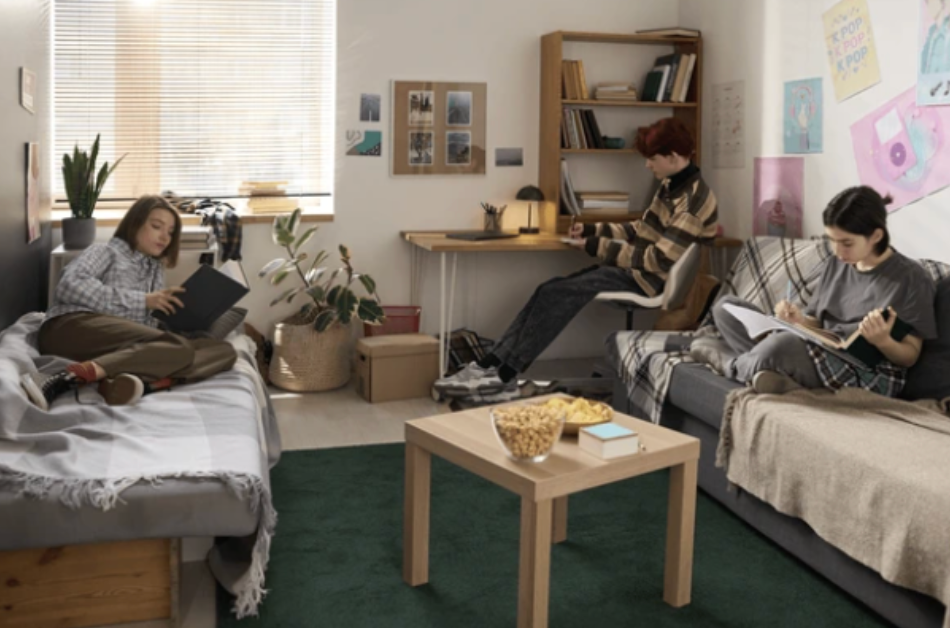
Starting college often means a lot of change at once. For many undergraduate students, it is my first time sharing a small space with a roommate. With new academic demands and social pressures, it is common for students to struggle with their mental health, which can affect not only their grades, but also their relationships and overall well-being. In this article, Benjamin R. Meagher and Brynn Anderson from the Department of Psychology at Hope College in Holland, MI, explore how the physical college environment relates to undergraduate students’ mental health. A student’s room on campus has many roles. It is a place to sleep, study, socialize, relax, and simply be alone. Even though dorm rooms come with standard furniture, they still offer a chance for students to personalize the space and express themselves, which can support autonomy and a sense of flourishing. However, imagining a certain ambience for a room does not always mean it becomes reality. Structural limitations, social conflicts, or one’s own ability to decorate and organize space can all interfere. This article focuses on the idea that a room that does not support self-regulation and coping may negatively affect students’ psychological needs. The study examined how students perceive their room’s ambiance and how that perception relates to their well-being. It also looked at how differences between an ideal room and the actual room of ambience may be linked to mental health outcomes such as symptoms of depression and anxiety.  In Study 1, 163 undergraduate students completed a questionnaire about their ideal version of on-campus housing. The ideal space was described as “the space you would want to live in on campus if there was an unlimited amount of time and money to build and personalize it. It is the type of place you would design if you could have anything you want in a room. It fits you like a glove and fulfills your every need.” After this description, participants rated how important certain aspects of the space were, such as relaxation, community, and how inviting it felt, and then were asked whether those same qualities described the feelings their actual rooms created in themselves and in others. The researchers also used established measures to assess depressive and anxiety symptoms, as well as negative and positive effects. Overall, this part of the article focused on whether the idealized version of students’ rooms matched their actual living space, and how that match, or mismatch, influenced their mental health. The results showed that when students’ ideal versions of their dorms were very different from their actual living spaces, they reported more depressive symptoms and higher negative effects. There was no strong relationship between room ambiance and positive affect. This suggests that dorm rooms may function more as spaces that protect students from negative emotions than as spaces that increase positive experiences. Study 2 addressed one of the limits of Study 1 by including roommates. In this second study, 75 roommate pairs, or 150 participants in total, completed the same measures used in Study 1. In addition, participants answered questions about their relationship with their roommate and completed the 44-item Big Five Inventory, which assesses extraversion, agreeableness, conscientiousness, emotional stability, and openness. The results of Study 2 were similar to those of Study 1 in terms of the relationship between mental health and the difference between perceived and ideal room ambience. Again, larger gaps between the real room and the ideal one were linked to more negative mental health symptoms. However, there were no significant findings connecting roommate relationship quality to residents’ mental health. This suggests that, in this study, mental health symptoms were more closely related to students’ own perceptions of their environment than to their relationship with their roommate. The study also found that individuals who described their rooms as high in self-expression, uniqueness, creativity, and pride, but low in spirituality, quiet, organization, productivity, and cleanliness, were more likely to report higher rates of negative mental health symptoms.
By Evelyn Martinez, Psychology Major, Emory University • June 25, 2026
After a child is born, one of the things they do most is sleep, which plays a major role in neurodevelopment and synaptic plasticity during this critical period of growth (Cheung et al., 2017). Because so many important developmental processes occur during sleep, it can be considered crucial to a child's development later in life. Despite its importance, however, research has shown that a high number of young children experience sleep problems (Davis et al., 2004). One widely recognized contributor to poor sleep among children is excessive screen media use in the home, whether through television viewing or touchscreen devices, which children often find highly stimulating (Cheung et al., 2017).
By Lexi Minor, Emory University • June 3, 2026
Stress is defined as an individual’s reaction, whether psychological or physiological, to external or internal challenges or triggers (American Psychological Association, 2018). There are many sources of stress that can change and fluctuate throughout someone’s lifetime. For instance, college students may cite their studies or future as being stressful, while adults may experience stress related to finances, jobs, or personal lives. One group of individuals that experiences particularly heightened levels of stress are healthcare professionals (Pulido-Martos, 2011). As a result, I sought to find a possible stress management strategy for individuals working in the healthcare field.
By Grace Peng, Undecided, Emory University • June 1, 2026
Feelings of belonging and connection within a community—most often fostered through social interaction—are crucial to well-being. However, people’s perceptions of social interaction are often clouded by pessimistic assumptions, such as believing others do not want to talk to them, underestimating their own conversational abilities, or holding negative beliefs about how others perceive them (Sandstrom et al., 2022). These fears can manifest through “civil inattention,” a term characterized by avoidance behaviors such as plugging in headphones or remaining glued to one’s phone (Sandstrom et al., 2022). Overreliance on these behaviors can cultivate what Ozawa de-Silva (2021) describes as a “lonely society,” emphasizing the need to encourage stronger social bonds within communities. The following review summarizes a week-long scavenger hunt conducted among university students by Sandstrom et al. (2022), in which participants completed challenges that involved either observing or talking with strangers. The researchers aimed, first, to support existing findings that people underestimate their ability to converse with others and, second, to demonstrate that talking to strangers can lead to positive experiences, revealing that many social fears are exaggerated. More broadly, the study sought to act as an intervention by showing that repeated exposure to positive interactions with strangers could encourage more positive attitudes toward social interaction. 1 Ozawa-de-Silva (2021) defines the term “lonely society” as a society that fosters feelings of irrelevance or lack of care due to pre-existing structures that hinder belonging and connectedness. 
By Sage Buchris, Psychology and Religion Major, Emory University • May 21, 2026
In recent years, mindfulness training has become a major trend in popular culture, commonly linked to reduced anxiety and perceived stress. Still, an important question remains: how effective is mindfulness training for college students? The study “Effects of mindfulness training on daily stress response in college students: Ecological momentary assessment of a randomized controlled trial” seeks to answer this. This study aimed to observe the effects of an 8-session mindfulness training program on first-year college students, specifically looking at daily experiences of stress, stress reactivity, and emotional regulation. The Learning 2 Breathe mindfulness program was adapted for college students and focused on increasing awareness of the body, thoughts, and emotions.
By Shreya Aithal, Neuroscience and Behavioral Biology Major, Emory University • April 14, 2026
Participants recruited were aged 18 years and above, and were diverse by “age, occupation, and ethnicity,” (Clair et al., 2021). Participants completed a 42-question electronic survey that included 20 questions from the Likert scale (which measured the frequency of certain behaviors and satisfaction with lifestyle elements), the UCLA Loneliness Scale, 12 author-designed questions specific to the SARS-CoV-2 pandemic, and questions to determine life satisfaction and institutional trust. The survey was initially distributed to a broad group of participants, who were then asked to share it with others who might be interested. Participants were asked to fill out an informed consent form prior to completing the survey. Results indicated that life satisfaction deceased for those who experienced greater social isolation. A Kruskal-Wallis test yielded a p-value less than 0.001, and median levels of life satisfaction showed that those with high social isolation experienced ~2.82 scores, while low social isolation participants had a median score of 3.47.
More Posts